



At 6 a.m., the schedule is perfect. By half past seven, it isn't.
A changeover runs long. Material is still on a truck somewhere. An urgent order jumps the queue. Nobody did anything wrong. This is simply what a production day looks like.
None of it is invisible, either. Screens show which machines are running, the planning system holds the schedule, and alarms flag what has gone wrong. What no screen tells you is what to do next. That question still lands on the same few experienced people, shift after shift.
So here is the question worth asking of any AI that claims to help: your production line doesn't follow a script. Why should your AI?
01 · WHEN THE PLAN CHANGES
The plan is a starting point, not a script
A production schedule gives everyone a shared starting point. It brings orders, machines, materials, and people together in a sequence that should make the best use of available capacity. Building that plan requires care and experience.
Then production starts, and the assumptions start to move. A machine becomes unavailable, a job runs over, or a delay in one area leaves another waiting. The team then needs to decide which parts of the schedule still make sense and which to adjust.
These adjustments are a normal part of running a plant. The hard part is that every fix has a knock-on effect. Pull a job forward to recover lost time, and you may add a changeover, or push a promised order past its ship date. The real question is never just "what moves?" It's "what does moving it cost everywhere else?" A useful AI system needs to help the team answer that second question while the situation is still changing.
The cost hiding in machine utilisation
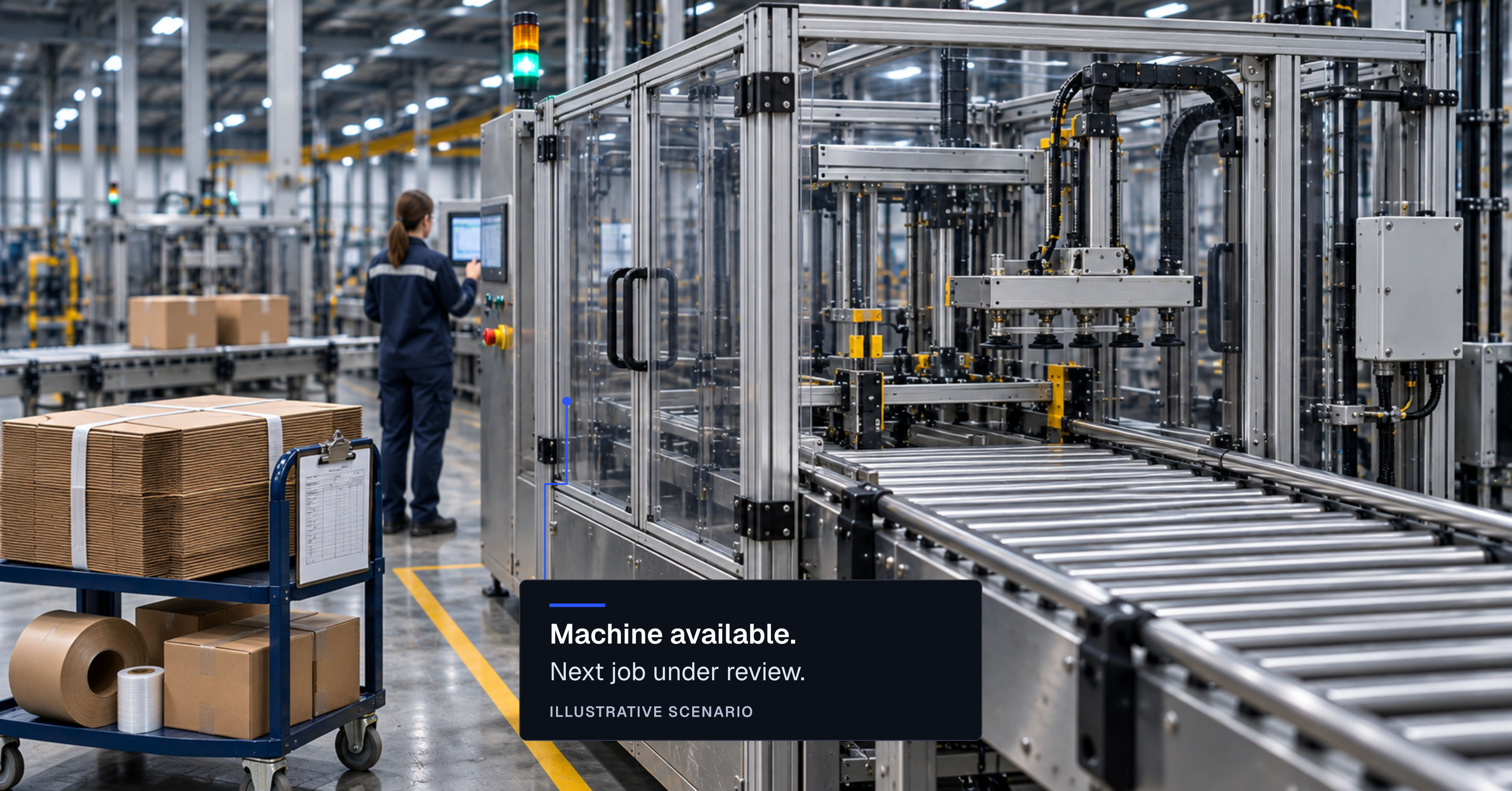
Machine utilisation asks a simple question: of the time a machine is available, how much of it is spent producing parts? An idle machine still costs money. It still needs maintenance, still takes up floor space, and still has to earn back its cost. When it produces fewer parts, each part carries more of that cost.
The reason for low utilisation may be less obvious than the idle machine itself. It could be waiting for material, an operator, or a decision on which job to run next. Improving utilisation therefore means understanding what is preventing productive work and whether that obstacle can be removed.
It also means looking beyond the individual asset. Keeping a machine busy can create excess inventory or divert work to an already overloaded process. The useful improvement is one that makes better use of capacity while supporting the rest of the operation.
02 · DECIDING WHAT RUNS NEXT
Why fixed rules run out of road
Fixed rules work well when the conditions and the appropriate response can be defined in advance. A machine reaches a threshold, an alert appears, and the team follows an established procedure. However, many production decisions depend on circumstances that a single rule cannot capture.
This is where reasoning earns its place. Not to replace rules, but to handle decisions where several factors must be weighed together and the right answer shifts as the situation changes.
What your best planner is actually weighing
Watch an experienced planner handle a messy morning, and it can look effortless. This job waits. That one moves. The third stays exactly where it is, and they can tell you why.
Behind those calls is a lot of quiet weighing: order priorities, machine availability, delays, changeover times, and production constraints. Then there are the things no system quite captures, like knowing that a machine shown as available is still waiting for maintenance clearance, or that a job marked ready hasn't had its material check.
This knowledge often lives with a small number of people who cannot cover every shift or join every discussion. When they are unavailable, other team members may spend valuable time gathering context before they can act.
Helping more people make informed decisions can reduce that dependency and free experienced staff to focus on where their judgement is needed most.
03 · REASONING WITH IO
Reasoning on top of the systems you already run
This is where IO comes in. IO is an Autonomous Reasoning System that starts with a mission rather than a prompt: for example, "help the team make better decisions to increase machine utilisation." That mission gives its reasoning a purpose, while context from SCADA, machine data, and planning systems helps establish what is happening.
So when a machine is waiting, IO can do what your best planner does on every shift. It evaluates which jobs could run, how priorities influence the choice, and whether changeovers or other constraints rule out an option. Then it recommends the next best action. A useful recommendation should explain why an option makes sense, what assumptions it relies on, and what it could affect elsewhere. That gives people a basis for reviewing the reasoning and for adding information the system may not have.
IO operates on top of the systems already supporting the operation. Those systems continue to provide data and perform their existing roles. The quality of the reasoning depends on the available context, so missing information and outdated assumptions need to be visible during recommendation assessment.
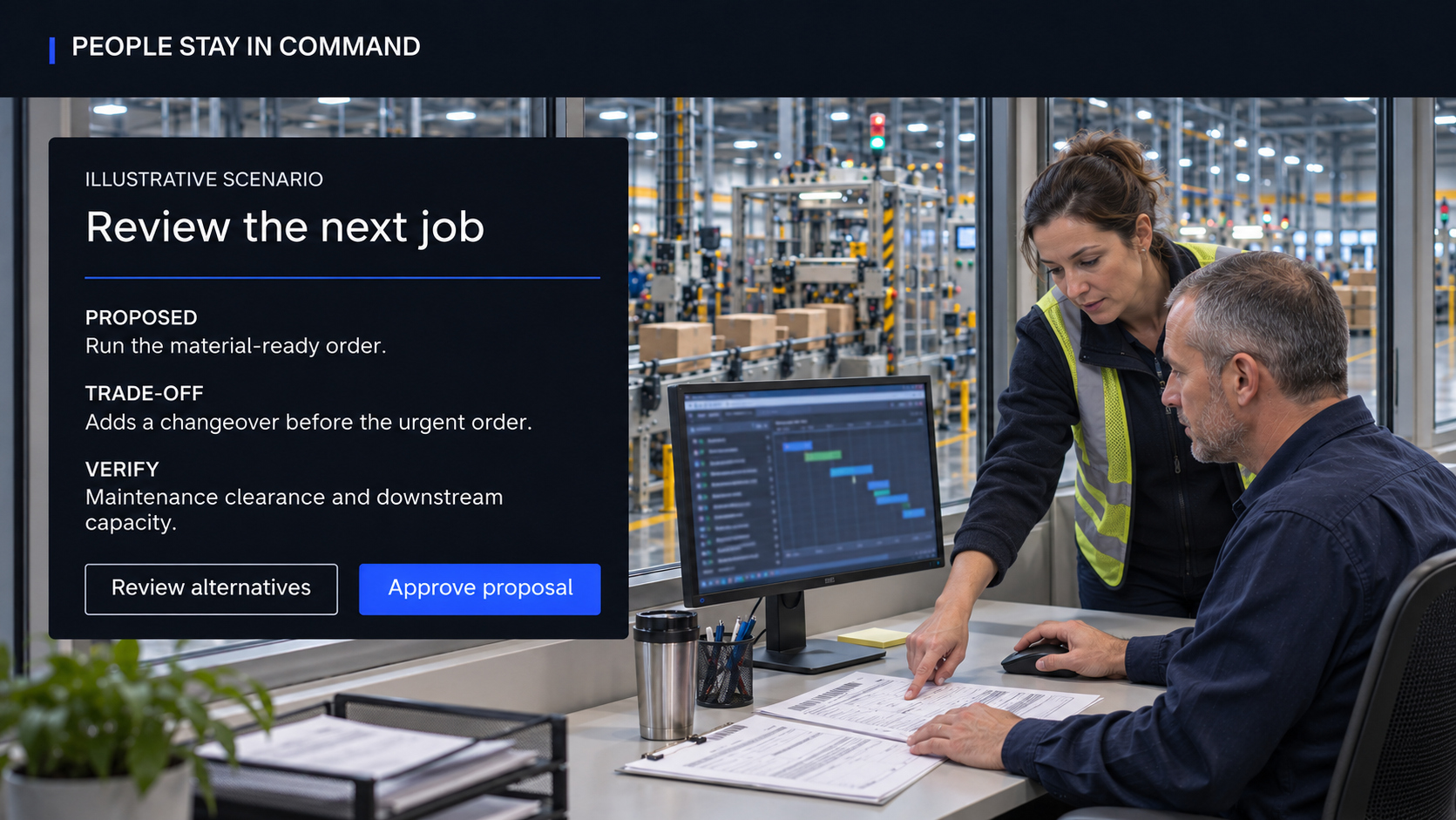
Your team still makes the call
This allows the site to evaluate whether IO recognises important constraints, suggests workable options, and reduces the effort required to reach a decision. It also provides a basis for deciding where greater autonomy would be useful.
Autonomy progresses from observing to recommending to operating within defined boundaries. Those boundaries specify which actions are permitted, under what conditions, and when a person must take over. Demonstrated performance and the site’s requirements set the pace, and the team decides where IO has earned greater responsibility.
04 · START WITH ONE PROBLEM
Start with one problem and a baseline
The best starting point is a single operational problem with a clear owner and measurable consequences. Establish today’s performance first, including utilisation, decision time, and the expert-hours spent resolving the issue. Include measures that show whether an improvement creates problems elsewhere.
Then assess IO against that baseline. Look for evidence that decisions are improving, avoidable idle time is decreasing, or experienced people are spending less time gathering information. A focused mission makes it easier to judge value and decide where to go next.
Bring us one operational problem that consumes expert time or hides measurable value.